Loading...
Это выпуск за 5 октября — 15 октября.Свежий выпуск →
News5 октября — 15 октябряweekly issue

The Return of the Physical

From roomier sleeper cars to offline clubs replacing dating apps with real conversation.

Knees finally fit into the long-distance sleeper berth, and strangers are suddenly willing to pay an entrance fee just for an evening of talk across a wooden table. This week belonged to tangible things: three hundred residents assembling a forty-meter mosaic by hand, quiet Petersburg bookshops holding ground against corporate shelves, and major museum halls rolling out the season's heaviest names.

To us, the city simply grew tired of screens and smooth surfaces. Inside, we look at wider train dimensions, the migration of modern dating into private interest clubs, and the small counters where book recommendations still come from memory rather than an algorithm.

Extra Inches on the Rails: Gauge T Comes to Budget Sleepers
Extra Inches on the Rails: Gauge T Comes to Budget Sleepers
Illustration: ZDES editorial

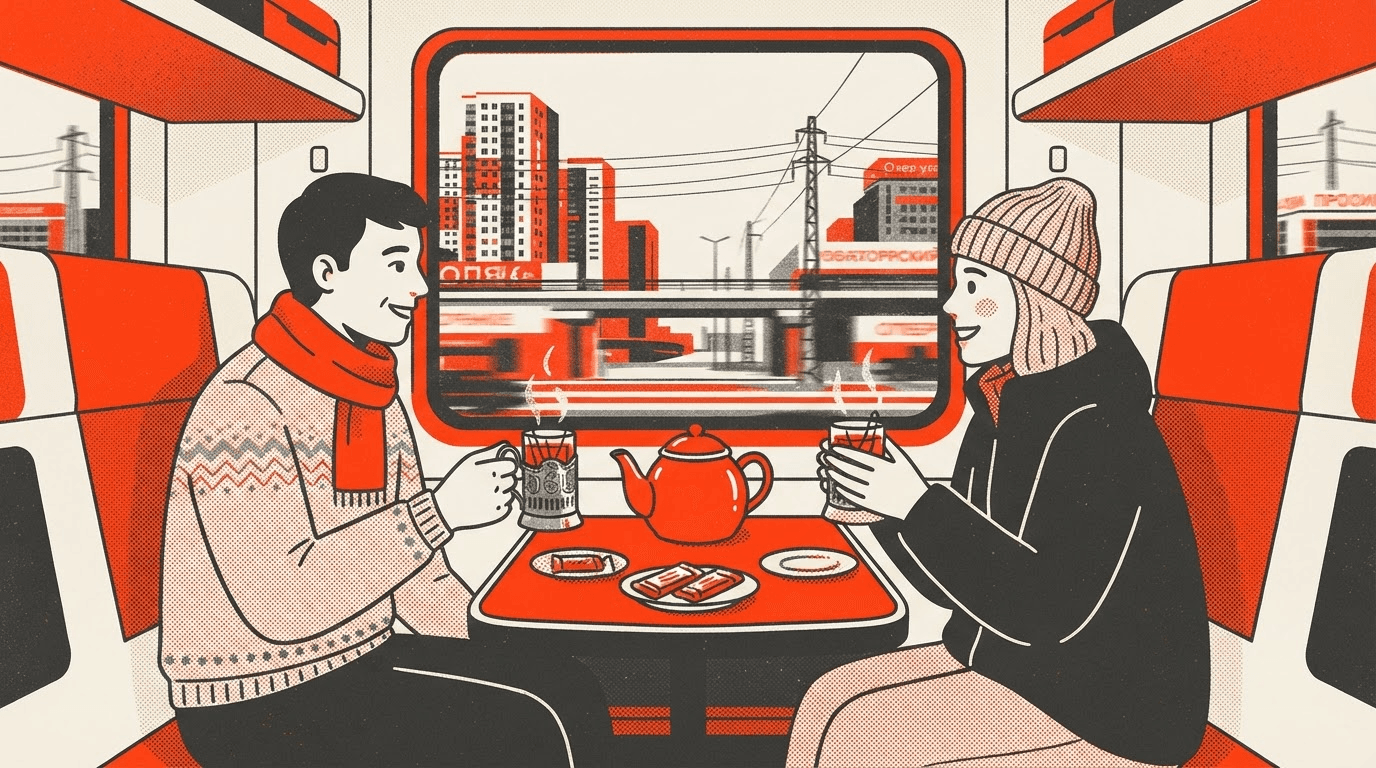
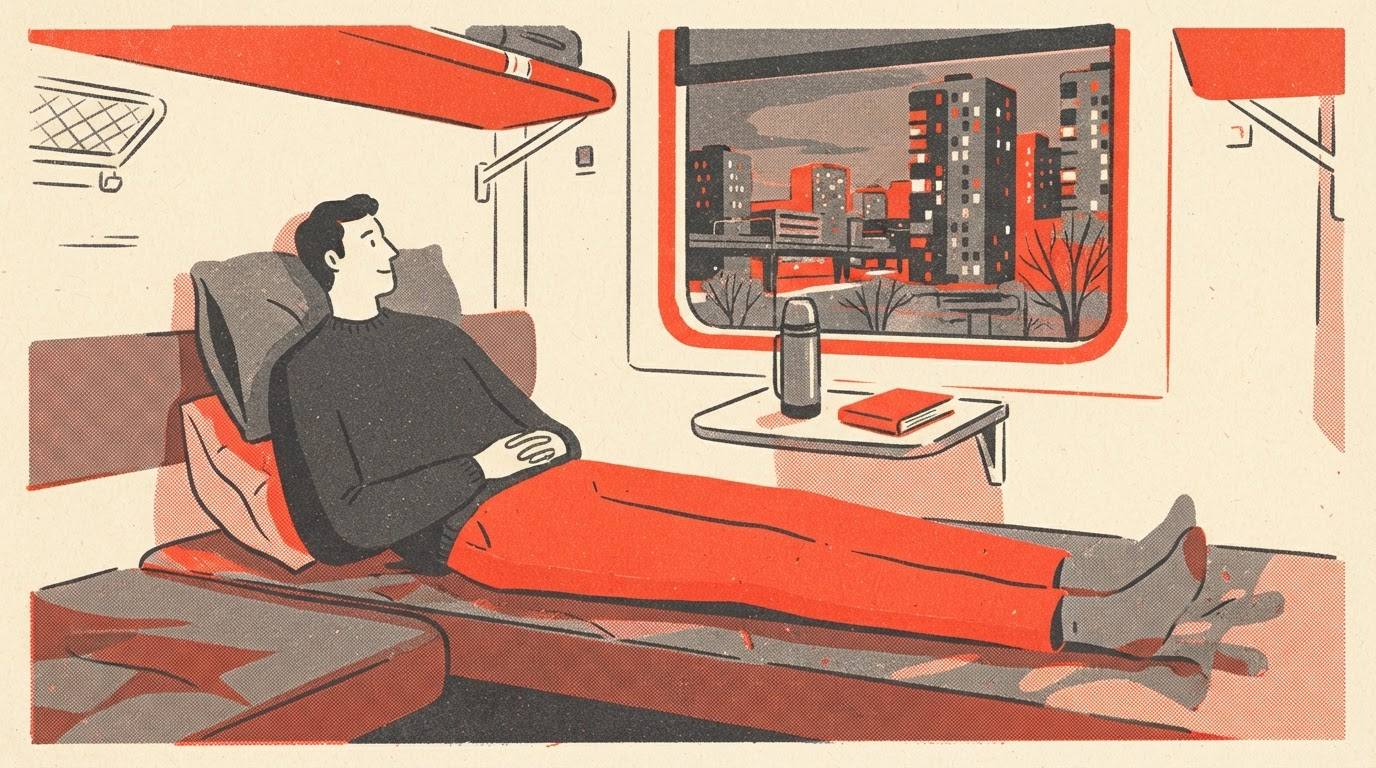
In 2025, train berths on the Moscow–St. Petersburg route quietly stretched to a full two meters. Those extra 15 centimeters of bed length and nine centimeters in the aisle made an immediate difference. Now, that same extra space is coming to the open-plan sleeper.

In 2026, the Tver Carriage Works plans to build the first new-generation open sleeper carriage with lengthened berths. RZD Deputy General Director Ivan Kolesnikov laid out the timeline at the Public Transport 2026 forum. The engineering relies on the wider Gauge T profile. Down the line, the same dimensions will shape dining cars, first-class sleepers, and luxury carriages.

The 2025 coupe run proved the math holds up: beds grew longer, aisles widened, and overall capacity still ticked up from 36 to 40 passengers. Bringing those extra inches to long-distance open carriages targets travel where space matters most. Overnight rail journeys are finally getting some breathing room.
Three Hundred Co-Authors and Forty Meters of Mosaic

Three Hundred Co-Authors and Forty Meters of Mosaic
Illustration: ZDES editorial

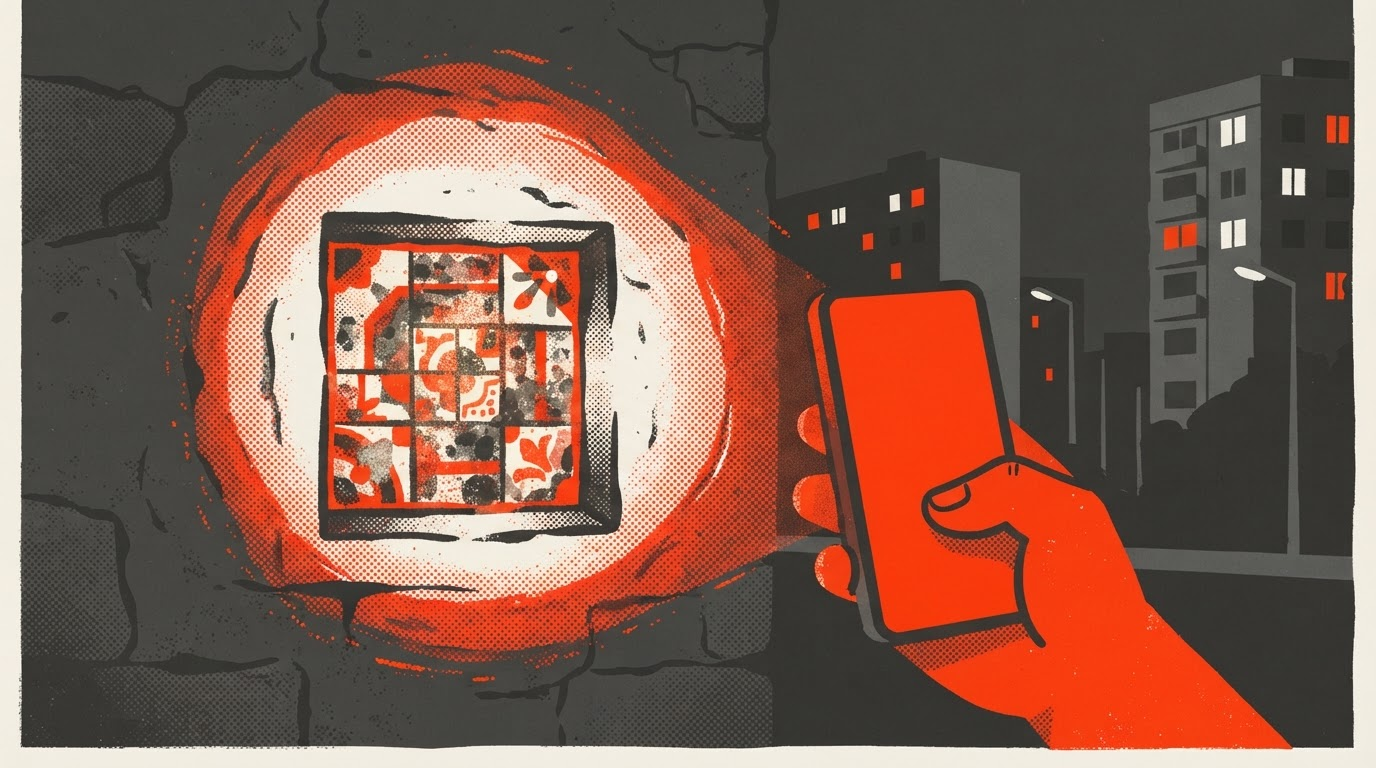
Point a phone flashlight at a small ceramic tile on a residential wall, and a glowing figure emerges from the dusk. St. Petersburg artist a l e s h a brought six portraits of modern city dwellers to Tyumen for the White House and Futuro complexes, letting one of them phosphoresce in the dark. It is just one of six new works rolled out under the Morphology of Streets public art project, led by Morfa Agency since 2017.

This season, artists worked under the overarching theme "Between Us," teaming up with 320 local residents. Collective art often risks collapsing into a messy compromise, but here the participants tackled serious manual craft. On Veteranov Truda Street, twenty-eight people spent ten days knitting a textile mural under maker Danila Kovalenko. Along Chervishevsky Trakt, an eleven-day installation put up a 41.5-meter glass mosaic sketched by Alisa Zvonareva, right after six intense days in the workshop. Meanwhile, forty participants in Galina Belova’s lab spent four days transferring neighborhood stories onto reclaimed Soviet ceramic tiles using decals and overglaze paints.

We appreciate how stubborn the project is about embedding intensely local memories into public walls. On Pervomayskaya Street, Moscow artist Sergey Kozlikin turned sixteen oral histories into mock-linocut window frames. Across town, Andrey Beat.c composed a massive mosaic based on ancient West Siberian sea beasts designed by kids, with 186 people laying down the pieces.

A street stops feeling like indifferent concrete the moment your own fingers helped set the tile.

Off the Chain Shelves: How Independent Bookshops Preserve St. Petersburg

Off the Chain Shelves: How Independent Bookshops Preserve St. Petersburg
Illustration: ZDES editorial

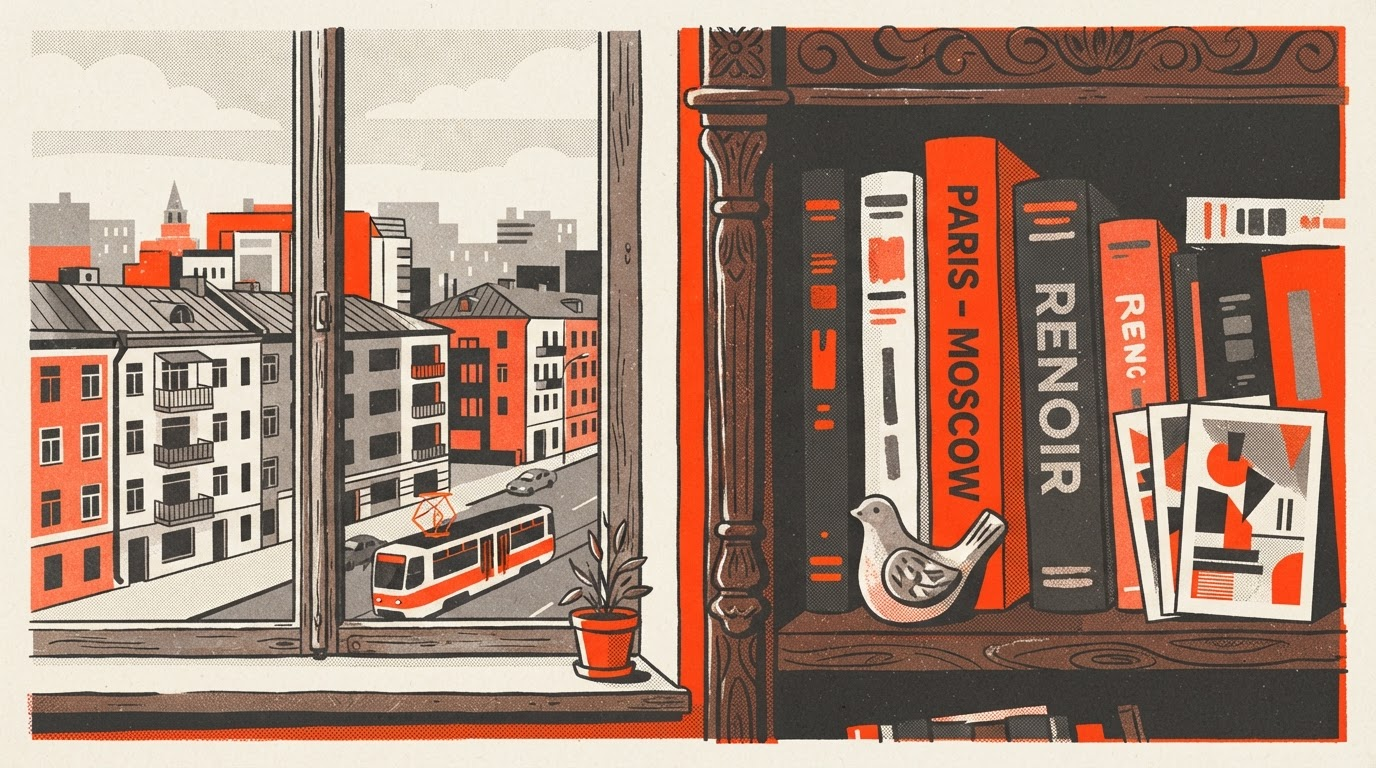
Authentic nineteenth-century furniture at 14 Korolenko Street shares space with foreign art catalogs and gift editions. In an 1876 building that also houses Joseph Brodsky’s One and a Half Rooms cafe-museum, the bookstore End of a Beautiful Era deliberately stands apart from chain retail. A few blocks away, at 19 Mayakovskogo Street, Vo Ves Golos framed its bookshelves with historic columns and mosaic tile. People drop in for film screenings, lectures, and discussions with visiting writers.

Inside these walls, the city keeps an ongoing conversation with itself. Antiquarian shop Akademiya at 57 Liteyny Avenue tracks down rare titles, art catalogs, and foreign periodicals, and in the spring of 2025 launched its own local history series about St. Petersburg. Over at 15 Fontanka Embankment, non-fiction veteran Poryadok Slov has been publishing its own research and hosting cultural gatherings since the 2010s. What won us over is how commerce quietly turns into fieldwork here.

At 4 Dmitrovsky Lane, independent presses launched the philosophical bookstore Dal, selling specialized literature at printing cost—a stubbornly noble gesture. For humanities debates and indie prose, readers head to Vse Svobodny at 23 Nekrasova Street. Down at 3 Nevsky Avenue, antiquarian shop Mir Iskusstva maintains the legacy of the historic art movement, displaying vintage maps, photographs, postcards, and rare bindings.

Large retail chains deliver predictable mass prints. Independent bookshops do something else: they safeguard the city's right to speak in its own voice.

From Van Gogh to Plisetskaya: Moscow Launches Its Main Exhibition Season

From Van Gogh to Plisetskaya: Moscow Launches Its Main Exhibition Season
Illustration: ZDES editorial

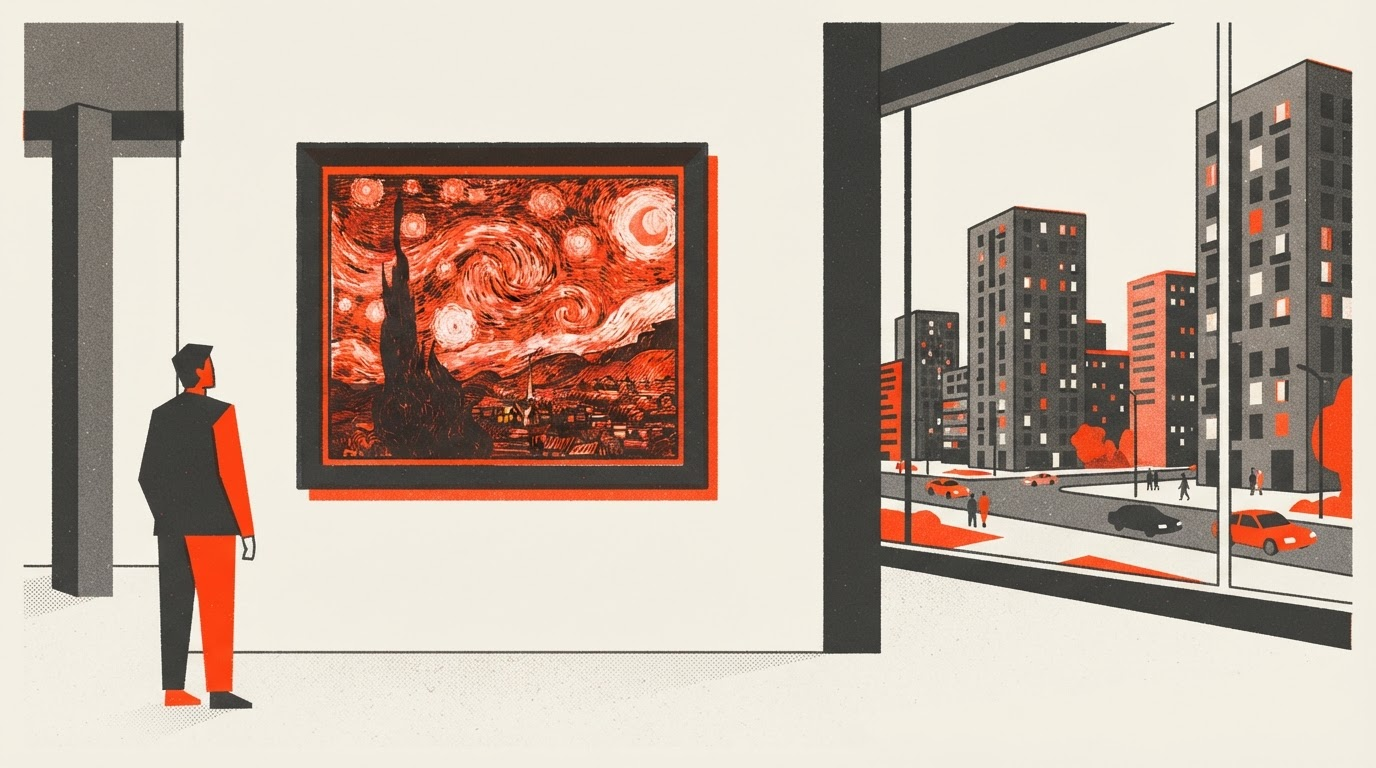
Van Gogh’s "The Arena at Arles" hangs before the Moscow public for the first time at the Gallery of 19th and 20th Century European and American Art, sharing wall space with Gauguin and Matisse. For 700 rubles, the project links the holdings of French collector Gustave Fayet directly to the historic Shchukin and Morozov acquisitions. The rooms stay quiet. The sheer density of masterworks forces you to slow down.

Across town on Obraztsova Street, the Jewish Museum opened "The Century of Maya Plisetskaya," a five-month biographical chronicle priced at 500 rubles. Meanwhile, beneath the glass roof of the GES-2 House of Culture, works by more than eighty artists investigate the fate of classical genres after their formal decline, carrying a 600-ruble entry. Nearby, series-driven pieces by Olga Bozhko and Pavel Grishin welcome visitors through simple free registration.

At the Fabrika Center on Perevedenovsky Lane, three separate projects unfold at once: from free-admission video art and Andrei Kuzkin’s introspective work to traditional folk embroidery confronting contemporary practices. We were won over by the sheer variety of it all. MMOMA displays Vadim Sidur’s carved granite and textile collages for 300 rubles, while the Voznesensky Center unpacks the visual archives of musician Egor Letov alongside Soviet ecological narratives.

Granted, the pricing swings can feel disorienting: eleven travel photographs by Steve McCurry at the Lumiere Gallery will set you back 3,500 rubles, whereas Alina Pinsky lets patrons view the School of Paris without charging a single ruble. The city asks you not to choose between textbook classics and underground studios, but to take in both. The trick is simply pacing yourself for the marathon.

Paying for Conversation: How Shared Interest Clubs Replaced Dating Apps

Paying for Conversation: How Shared Interest Clubs Replaced Dating Apps
Illustration: ZDES editorial

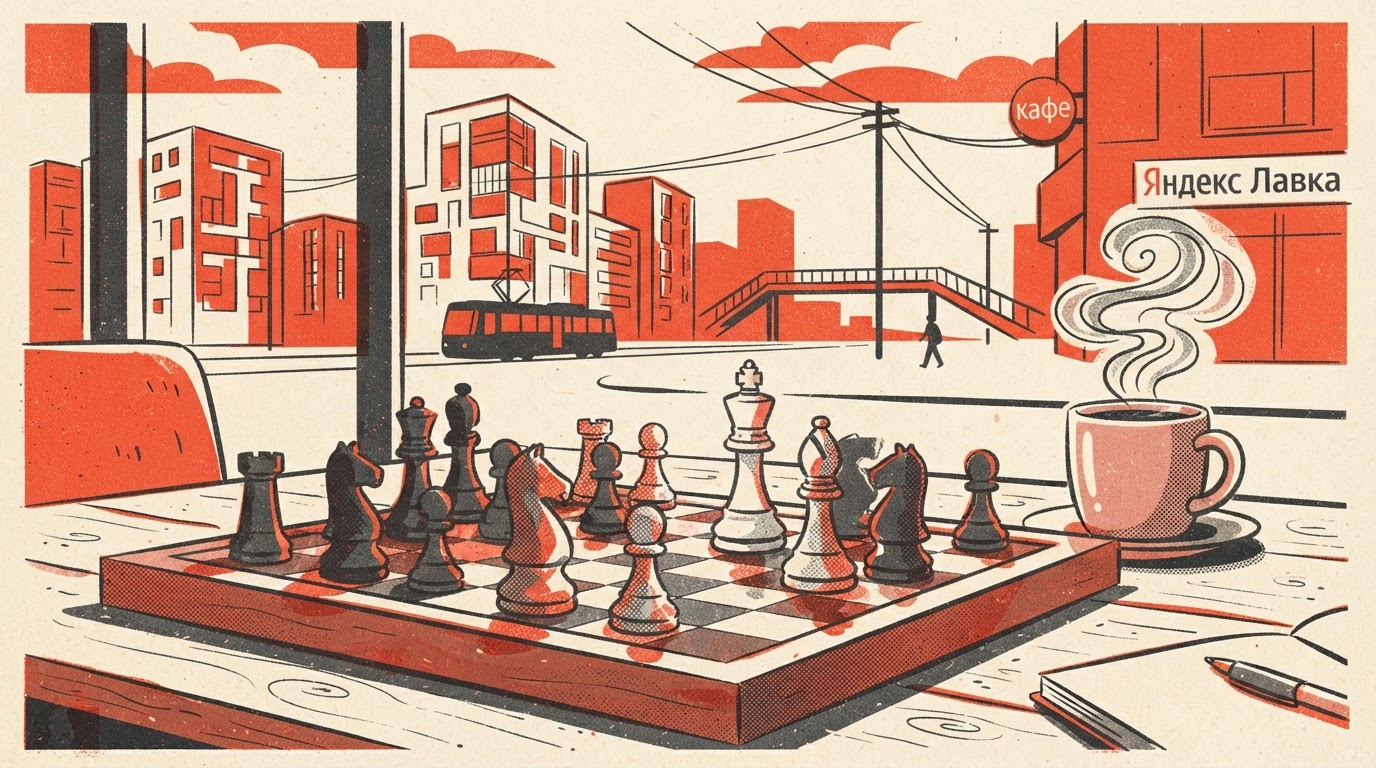
Every evening, wooden pieces click across the tables at Peshka bistro. Rep Chess runs free daily tournaments here, perhaps the most straightforward way to sit opposite a stranger and forget about your screen for two hours. In the city, live conversation has completely stopped being an accident; it is now an organized pastime with set fees and schedules.

The formats are multiplying fast. The Chekhov & Company bookstore on Goncharnaya gathers readers two to three times a month with tickets starting at 1,000 rubles. On Thursdays, Uptown Dinners seats pre-registered guests at communal tables for an organizer fee starting at 1,000 rubles. The Kavior app focuses on collage workshops, charging up to 3,000 rubles a month. Tsiferblat anticafe fills its rooms with free lectures, relying on a per-minute rate of up to 4.5 rubles with a daily cap of 900 rubles.

Physical exercise and foreign languages follow the same logic. Social Run Community hosts free Saturday runs in Moscow and St. Petersburg, alongside small-group sessions for 700 rubles. In Lyalin Lane, Viva Lingua Club charges 800 rubles for a trial chat in English or French, and 3,000 rubles for an individual lesson with a native speaker. Meanwhile, the Fémine women's community holds workshops in a loft on 3rd Mytishchinskaya for a donation starting at 500 rubles.

We appreciate this unapologetic pragmatism: urbanites are exhausted by endless swiping and willing to pay for a simple excuse to say hello. Buying a workshop pass or showing up for an early Saturday run is an honest price to pay for taking your eyes off a smartphone.